For decades, the dream of seamlessly integrating the human mind with artificial intelligence has captivated scientists and futurists alike. Brain-Computer Interfaces (BCIs) represent the frontier of this ambition, promising everything from restoring motor functions to enhancing cognitive abilities. Yet, traditional BCIs have grappled with significant limitations: invasiveness, low signal resolution, and a lack of cell-type specificity. Enter optogenetics – a revolutionary technique that is fundamentally changing how we interact with, understand, and ultimately program the brain.

The human brain, an organ of unparalleled complexity, has long remained an enigma, its intricate neural circuits and the 'neural code' that governs thought, emotion, and action largely beyond our direct manipulation. However, a revolutionary convergence of biotechnology and artificial intelligence is now prying open this black box. At the forefront of this scientific frontier stands optogenetics – a technique that allows for the control of specific neurons with light – which, when integrated with sophisticated AI, is giving rise to unprecedented AI-Brain Interfaces. This fusion promises not only to unlock the brain's deepest secrets but also to usher in a new era of therapeutic interventions and human-computer interaction.
Overview: Bridging Biology and Computation
AI-Brain Interfaces (AI-BCIs) represent the next generation of Brain-Computer Interfaces (BCIs), moving beyond simple signal decoding to incorporate intelligent systems capable of learning, adapting, and even predicting neural states. Traditional BCIs primarily focused on reading brain signals to control external devices. The advent of optogenetics injects a crucial bidirectional element, allowing for highly precise writing into neural circuits. Optogenetics leverages genetic engineering to make specific neurons light-sensitive, enabling researchers to activate or silence them with millisecond precision using specific wavelengths of light. When this precise control is paired with AI’s capacity for complex pattern recognition, data processing, and adaptive algorithms, the potential for deciphering and manipulating the neural code becomes truly transformative. This synergy offers a powerful tool for neuroscience research, pushing the boundaries of what’s possible in treating neurological disorders and enhancing human capabilities.
Principles & Laws: The Light-Activated Neuron and the Neural Symphony
Optogenetics: Light as a Neural Switch
At its core, optogenetics operates on a relatively simple yet profoundly impactful principle: genetically modified neurons can be controlled by light. The key players are opsins, light-sensitive proteins derived primarily from microbes like algae and bacteria. These opsins, when expressed in mammalian neurons, act as ion channels or pumps that open or close in response to specific wavelengths of light. For instance, Channelrhodopsin-2 (ChR2), derived from green algae, is a blue light-sensitive cation channel. When blue light strikes a neuron expressing ChR2, the channel opens, allowing positive ions to flow into the cell, depolarizing it and triggering an action potential – effectively turning the neuron 'on.' Conversely, opsins like Halorhodopsin (NpHR) from archaea respond to yellow light by pumping chloride ions into the cell, hyperpolarizing it and turning the neuron 'off.' This exquisite temporal and spatial control over neuronal activity allows scientists to precisely perturb neural circuits and observe the causal effects on behavior or cognition.
The Neural Code: Decoding the Brain's Language
The 'neural code' refers to the set of rules by which electrical and chemical signals within the brain represent information. While its exact nature is still debated, it is understood to involve patterns of action potentials (spikes), their timing, frequency (firing rates), synchronization across populations of neurons, and oscillatory rhythms. Understanding this code is fundamental to effective AI-Brain Interfaces. AI algorithms are trained to 'read' these complex patterns from neural recordings – be it from electrophysiological probes or functional imaging – to infer intentions, decode thoughts, or identify pathological brain states. The challenge lies in the sheer volume and variability of neural data, where AI's advanced pattern recognition capabilities become indispensable.
AI-Brain Interfaces: Bidirectional Communication
An AI-Brain Interface fundamentally establishes a closed-loop system of communication between an artificial intelligence system and biological neural networks. This involves two main components: 1) Neural Decoding, where AI interprets raw brain signals (e.g., from optogenetically modulated neurons or spontaneous activity) into actionable information or commands. 2) Neural Encoding/Stimulation, where AI generates precise instructions for modulating brain activity. Optogenetics provides the high-fidelity 'write' capability, allowing the AI to send finely tuned optical signals to specific neuronal populations, thereby directly influencing brain function. This bidirectional dialogue allows AI to not only understand the brain but also to dynamically adjust and optimize its interventions, creating an adaptive, intelligent interface.
Methods & Experiments: Engineering the Interface
Genetic Engineering and Viral Vector Delivery
The journey of optogenetics begins with genetic engineering. Researchers use viral vectors, most commonly adeno-associated viruses (AAVs), to deliver the DNA encoding opsins into specific neuronal populations. These viral vectors are engineered to be replication-deficient and can be modified to express opsins under the control of cell-type-specific promoters, ensuring that only desired neurons (e.g., dopaminergic neurons, cortical pyramidal cells) become light-sensitive. This precise targeting is critical for avoiding off-target effects and for dissecting the roles of specific cell types within complex circuits.
Light Delivery Systems
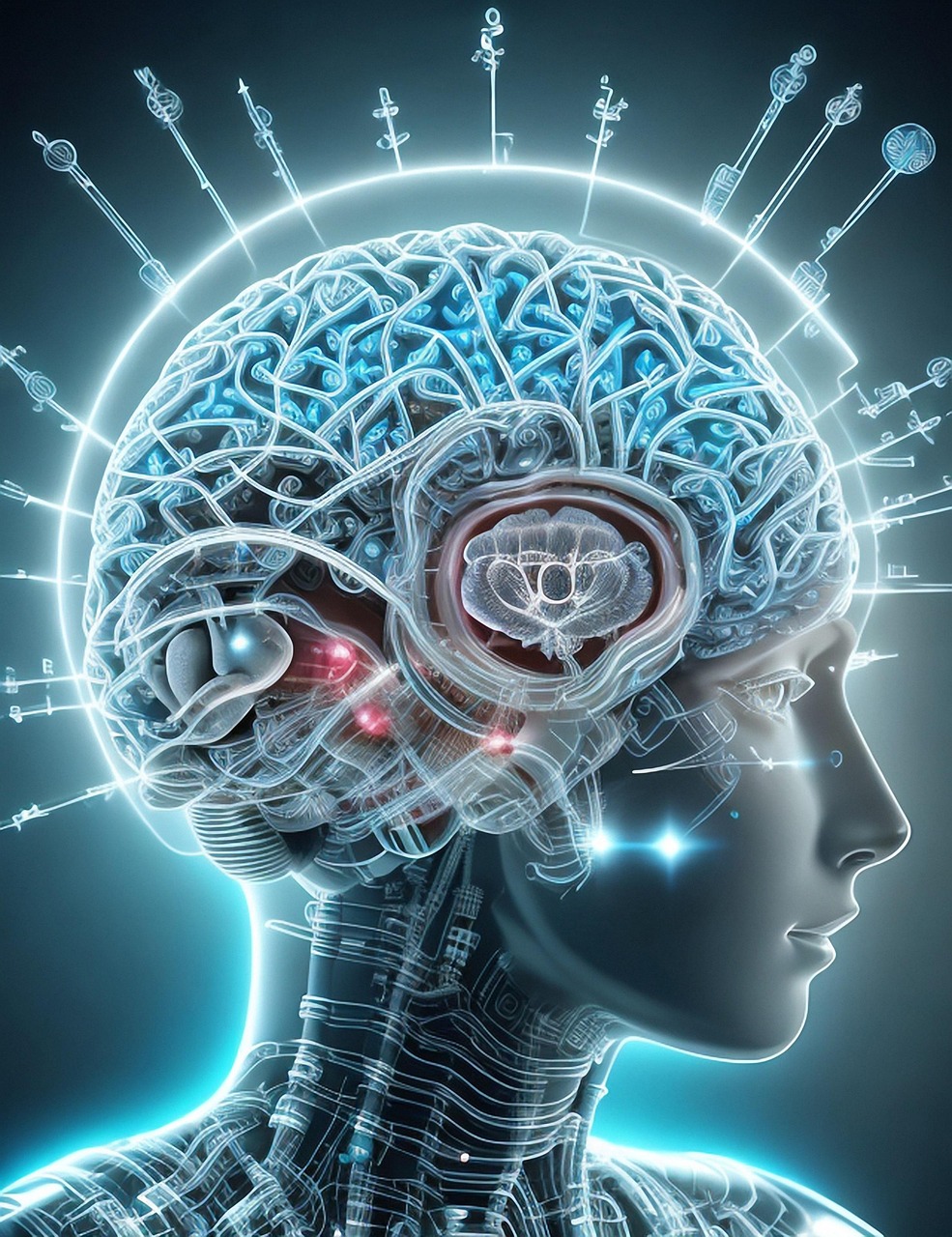
Once opsins are expressed, light needs to be delivered to the target neurons. For superficial brain regions, fiber optics surgically implanted into the brain are a common method. More advanced techniques include implantable micro-LED arrays, which allow for simultaneous stimulation of multiple distinct brain regions or patterns within a single region. The frontier in light delivery involves wireless, battery-free optogenetic devices, often powered by inductive coupling, and increasingly, efforts toward non-invasive methods, though current non-invasive approaches struggle with depth and specificity.
Concurrent Neural Recording and AI Integration
To create a truly intelligent interface, optogenetic stimulation must be coupled with real-time neural activity monitoring. This typically involves electrophysiological recordings (e.g., multi-electrode arrays, patch-clamp) that capture the electrical signals of neurons, or calcium imaging techniques which visualize neuronal activity via fluorescent indicators. The recorded data is then fed into AI algorithms – often machine learning models like recurrent neural networks, support vector machines, or deep learning architectures – which decode patterns, identify relationships, and make predictions about brain states or intentions. In a closed-loop system, the AI then uses this decoded information to dynamically adjust the parameters of optogenetic stimulation, creating a feedback loop that continuously optimizes brain modulation in real-time. This iterative process allows the AI to learn the brain's responses and fine-tune its control, much like a thermostat regulating temperature.
Data & Results: Unprecedented Precision and Causal Insights
The advent of optogenetics combined with AI-Brain Interfaces has yielded a torrent of rich data and unprecedented insights. Experiments typically generate vast datasets of neural spiking activity, local field potentials, and corresponding behavioral outputs. AI algorithms excel at processing this high-dimensional, temporal data, performing tasks such as dimensionality reduction, feature extraction, and classification to identify meaningful patterns that are often imperceptible to human analysis. Researchers have demonstrated the ability to precisely control specific behaviors in animal models, such as inducing movements, modulating reward pathways, or even implanting false memories by activating or silencing targeted neuronal populations with light. The key result is the establishment of clear causal links between specific neural activity patterns and complex behaviors or cognitive states, which was previously challenging to achieve with correlational methods. For example, AI-driven optogenetic systems have successfully restored aspects of motor function in models of spinal cord injury by stimulating specific motor cortex neurons in response to decoded movement intentions. Other studies have shown remarkable success in using AI to identify aberrant neural firing patterns associated with epilepsy and then using optogenetics to selectively silence those circuits, preventing seizures in real-time. The precision offered by optogenetics, combined with the adaptive intelligence of AI, moves us beyond merely observing the brain to actively interrogating and reshaping its functions with unparalleled accuracy.
Applications & Innovations: Redefining Human Potential
Advanced Neuroprosthetics and Sensory Restoration
One of the most immediate and impactful applications is in neuroprosthetics. AI-driven optogenetic BCIs could enable highly intuitive control of robotic limbs by directly stimulating motor cortex neurons to mimic natural motor commands. Moreover, optogenetics holds immense promise for restoring sensory function. By directly stimulating specific visual or auditory cortex neurons in response to input from artificial sensors, AI could create 'sight' or 'sound' for individuals with sensory impairments, surpassing the capabilities of traditional cochlear implants or retinal prosthetics.
Targeted Therapies for Neurological and Psychiatric Disorders
Optogenetics offers a 'next generation' Deep Brain Stimulation (DBS) for disorders like Parkinson's disease, essential tremor, and epilepsy. Current DBS uses electrical stimulation, which is broad and can have side effects. Optogenetics, guided by AI, could precisely stimulate or inhibit only the specific neurons implicated in disease pathology, significantly reducing side effects and improving efficacy. It also holds potential for treating severe depression, anxiety disorders, and chronic pain by modulating specific limbic system or pain pathway circuits with unprecedented precision.
Cognitive Enhancement and Brain-to-Brain Interfaces
While still in early and highly speculative stages, the ability to precisely modulate neural circuits opens theoretical avenues for cognitive enhancement – potentially improving memory, learning, or attention. More profoundly, AI-Brain-Brain Interfaces could emerge, allowing for direct communication or even skill transfer between individuals' brains, mediated by AI decoding one brain's activity and optogenetically encoding it into another. These applications raise significant ethical questions but highlight the transformative potential.

Unraveling Brain Function and Development
Beyond clinical applications, the primary use of optogenetics has been in fundamental neuroscience research. AI-driven optogenetic tools allow researchers to systematically probe neural circuits, map their connectivity, and understand their causal roles in behavior, accelerating our understanding of consciousness, memory formation, and decision-making.
Key Figures: Pioneers of a New Era
The field of optogenetics owes its genesis to several pioneering scientists. Most notably, Karl Deisseroth and Edward Boyden, working independently and collaboratively at Stanford and MIT, respectively, are widely credited with developing and disseminating optogenetics as a mainstream neuroscience tool in the early 2000s. Their work in identifying and adapting microbial opsins for mammalian neural control laid the foundational biotechnological groundwork. The integration with AI has been a broader, interdisciplinary effort involving countless neuroscientists, computer scientists, and engineers who have developed the algorithms, hardware, and experimental paradigms necessary to create intelligent, closed-loop AI-Brain Interfaces.
Ethical & Societal Impact: Navigating the Future of the Mind
The profound capabilities of AI-Brain Interfaces raise significant ethical and societal questions. Concerns about privacy and autonomy are paramount: who owns neural data, and what are the implications if AI can read and potentially 'influence' thoughts or intentions? The potential for 'mind control' or unintended psychological manipulation, even with therapeutic intent, necessitates robust ethical frameworks. Issues of safety and risk are also critical, particularly with genetically modified organisms and implanted devices – long-term effects of chronic optogenetic stimulation, potential immunogenicity, and off-target genetic expression are major considerations. Furthermore, questions of equity and access arise: will these transformative technologies be available only to a privileged few, exacerbating societal divides? Finally, the prospect of human augmentation – transcending natural human capabilities – forces a re-evaluation of what it means to be human and the potential for a 'post-human' future. Careful deliberation and public engagement are essential to guide the responsible development of these powerful technologies.
Current Challenges: Hurdles on the Path to Revolution
Despite rapid advancements, significant challenges remain. A major hurdle is the limited depth penetration of light in brain tissue; delivering light to deep brain structures precisely and non-invasively without damaging overlying tissue is still an active area of research. Enhancing the specificity and targeting of opsin expression, ensuring that only desired neurons are affected, remains crucial. The body's immune response to viral vectors and foreign opsins can also limit the long-term efficacy of optogenetic interventions. Miniaturization, biocompatibility, and power efficiency of implanted optogenetic devices are critical for clinical translation. From an AI perspective, fully decoding the immensely complex and dynamic neural code, which varies between individuals and changes over time, requires even more sophisticated algorithms and personalized models. Furthermore, the development of robust, chronic, and safe interfaces that can operate reliably for years inside the human brain is a formidable engineering challenge.
Future Directions: Pushing the Boundaries
The future of AI-Brain Interfaces powered by optogenetics is vibrant with innovation. Research is moving towards developing entirely non-invasive optogenetic methods, potentially using focused ultrasound or magnetic fields to modulate light delivery, or even genetically encoding light-sensitive nanobots. New generations of opsins with enhanced light sensitivity, dual activation/inhibition capabilities, and broader spectral properties are constantly being engineered. AI systems will become increasingly sophisticated, employing truly 'brain-inspired' architectures and learning algorithms that can rapidly adapt to individual neural dynamics and predict optimal stimulation patterns with minimal human input. We can anticipate the development of truly autonomous, closed-loop AI-BCIs that can self-regulate and adapt to dynamic brain states in real-time. Multi-modal interfaces, combining optogenetics with other techniques like fMRI, EEG, or chemical sensing, will provide a richer, more comprehensive understanding and control of brain function. Ultimately, the goal is to create personalized neural 'maps' and 'dictionaries' that AI can use to provide tailored, precise, and highly effective interventions for a wide spectrum of neurological and psychiatric conditions, and to unravel the fundamental mysteries of the mind.
Conclusion: A New Dawn for Neuroscience and AI
The synergy between optogenetics and artificial intelligence is fundamentally reshaping our understanding of the brain and our capacity to interact with it. By providing unprecedented spatiotemporal control over neural activity, optogenetics has empowered AI-Brain Interfaces to move beyond passive observation to active, intelligent modulation. This convergence promises a future where debilitating neurological and psychiatric disorders are precisely treated, where human cognitive functions can be better understood and potentially enhanced, and where the very fabric of thought and consciousness becomes accessible for scientific inquiry. While significant ethical and technical challenges lie ahead, the rapid pace of innovation suggests that AI-driven optogenetic interfaces are not merely a scientific curiosity, but a revolutionary paradigm shift poised to unlock the full potential of the human brain, heralding a new dawn for both neuroscience and artificial intelligence.