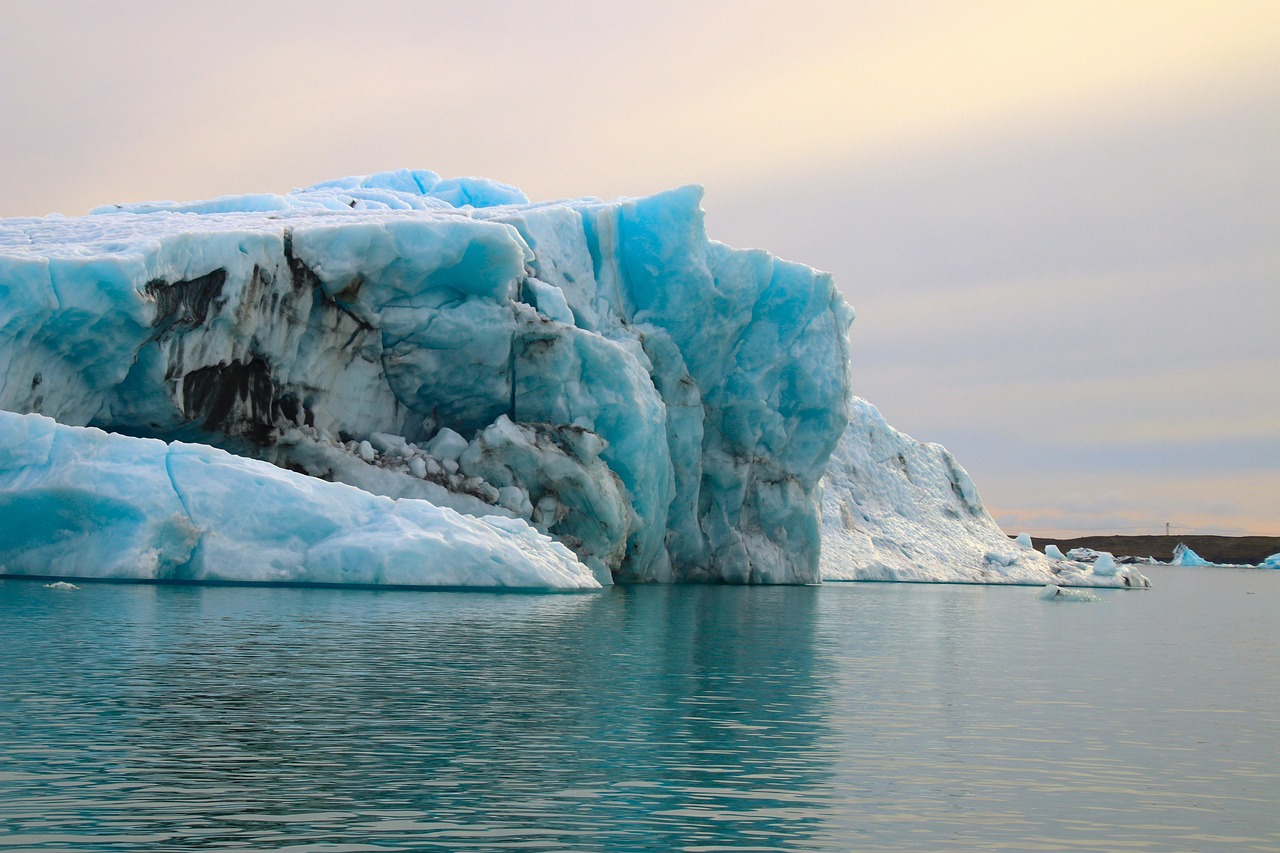
The Arctic, a realm of breathtaking ice formations, vast tundra, and resilient wildlife, stands as one of Earth's last great wildernesses. For centuries, its remoteness offered a shield, preserving its pristine nature from the worst of human impact. Yet, a silent, insidious invader has breached this natural defense: microplastics. These tiny fragments, often invisible to the naked eye, are now ubiquitous across the polar region, from the deepest abysses to the highest ice caps, fundamentally rewriting the delicate balance of an already fragile ecosystem.
Introduction to Environmental Science
The Arctic, a region often romanticized as the last bastion of untouched wilderness, is paradoxically becoming one of the most significant global sinks for microplastic pollution. This silent invasion, propelled by complex oceanographic and atmospheric currents, threatens to fundamentally rewrite the ecological dynamics of polar ecosystems, impacting everything from microscopic plankton to iconic marine mammals. Understanding the intricate pathways, impacts, and potential solutions to this burgeoning environmental crisis requires a multidisciplinary approach, integrating advanced environmental science, cutting-edge analytical techniques, and a profound appreciation for the interconnectedness of Earth's systems.
Overview: The Pristine Peril
Microplastics, defined as plastic particles less than 5 millimeters in diameter, originate predominantly from mismanaged waste thousands of kilometers away. These ubiquitous fragments, fibers, and pellets traverse vast distances through atmospheric transport, oceanic currents, and riverine inputs, eventually congregating in the Arctic. Unlike larger debris, microplastics are insidious, easily ingested, and virtually invisible, complicating detection and remediation. The Arctic's unique environment – extreme cold, sea ice dynamics, and specialized food webs – makes it exceptionally vulnerable. As climate change accelerates sea ice melt, it not only opens new transport routes but also releases microplastics previously trapped within the ice, exacerbating polar pollution.
Principles & Laws: The Science of Dispersal and Degradation
Polymer Chemistry and Environmental Fate
The environmental behavior of plastics is dictated by their polymer chemistry. Polyethylene (PE), polypropylene (PP), polyethylene terephthalate (PET), and polystyrene (PS) have varying densities, chemical stabilities, and degradation rates. While persistent, plastics undergo physical and chemical degradation – primarily photodegradation and mechanical abrasion – fragmenting into micro- and nanoplastics. This process is slower in the cold Arctic, but once fragmented, these persistent pollutants pose a long-term threat. Biofouling also alters buoyancy, influencing their vertical movement in the water column.
Oceanographic and Atmospheric Transport Dynamics
The Arctic acts as a 'cul-de-sac' for ocean currents. Major currents like the North Atlantic Current and the Transpolar Drift funnel plastics into the Arctic Ocean. Atmospheric transport is a significant pathway, with microplastic fibers and fragments traveling long distances before deposition onto land, ice, and sea, explaining their presence in remote Arctic ecosystems. The principle of Arctic amplification, where the region warms rapidly, impacts these transport dynamics by altering ice cover and ocean circulation patterns, further influencing marine plastics distribution.
Ecotoxicology and Contaminant Interaction
Microplastics are not inert; they act as vectors for persistent organic pollutants (POPs), heavy metals, and other contaminants that sorb onto their surfaces. Once ingested, these plastics can release adsorbed toxins into an organism's tissues, potentially leading to bioaccumulation and biomagnification up the food chain. The physical presence of microplastics can cause abrasive damage, block digestive tracts, and reduce feeding efficiency, affecting growth, reproduction, and overall health of Arctic marine life.
Methods & Experiments: Unveiling the Invisible Threat
Sampling Methodologies
Detecting microplastics in the challenging Arctic requires rigorous sampling. Samples are collected from various compartments:
- Water Column: Manta trawls for surface water; Niskin bottles or in-situ pumps for subsurface depths.
- Sea Ice: Ice cores are drilled, melted, and filtered to isolate trapped microplastics, revealing historical accumulation.
- Sediment: Grab samplers and box corers collect seafloor sediments, where denser microplastics settle.
- Biota: Organisms (zooplankton, fish, seabirds, marine mammals) are collected, and their gastrointestinal tracts or tissues are meticulously analyzed.
- Atmospheric Deposition: Passive and active air samplers capture airborne microplastics to understand transport pathways.
Laboratory Analysis and Identification
Post-collection, samples undergo a series of laboratory procedures:
- Separation: Organic matter is digested (e.g., hydrogen peroxide); density separation using salt solutions (e.g., NaCl, NaI) isolates plastics from denser materials.
- Filtration: The plastic-containing fraction is filtered onto specialized membranes for visual inspection and spectroscopic analysis.
- Identification and Quantification: Crucial for polymer identification and particle characterization:
- Fourier-Transform Infrared (FTIR) Spectroscopy: Identifies polymer types by analyzing unique vibrational spectra, effective for particles down to tens of micrometers.
- Raman Spectroscopy: Provides molecular fingerprints for polymer identification, often suitable for smaller particles.
- Pyrolysis-Gas Chromatography/Mass Spectrometry (Py-GC/MS): A highly sensitive method that thermally breaks down plastics into characteristic volatile compounds for unambiguous polymer and additive identification.
- Scanning Electron Microscopy-Energy Dispersive X-ray Spectroscopy (SEM-EDS): Used for detailed morphological analysis (shape, surface texture) and elemental composition, distinguishing natural from synthetic fibers and identifying fillers.
- Automated Particle Counting: Software and instruments efficiently count, size, and classify microplastic particles.
Environmental Modeling
Numerical models simulate ocean currents and atmospheric transport to predict microplastic pathways, accumulation zones, and ultimate sinks. These models are crucial for understanding global distribution and forecasting future trends, incorporating factors like plastic buoyancy, size, and degradation rates.
Data & Results: The Unsettling Truth
Research consistently reveals significant microplastic concentrations across all Arctic compartments. Surface waters show levels comparable to – or exceeding – polluted coastal areas. Sea ice acts as a temporary reservoir, with studies finding thousands of particles per liter of melted ice, indicating substantial release upon melt. Sediments form long-term sinks reflecting historical pollution. Predominantly identified polymers are PE and PP (packaging, fishing gear), alongside PET and PS. Ecological impacts are increasingly evident: zooplankton ingest microplastics, disrupting energy transfer. Fish, seabirds, and marine mammals accumulate plastics, causing physical harm, altering feeding, and transferring adsorbed chemical contaminants, posing risks to individual health and entire populations within Arctic ecosystems. Ubiquitous discovery in Arctic snow and glaciers underscores pervasive atmospheric transport.
Applications & Innovations: Towards a Cleaner Arctic
Advanced Monitoring and Sensing
Technological innovations are pivotal for understanding and monitoring Arctic microplastics. Autonomous underwater vehicles (AUVs) equipped with advanced sensors are under development for in-situ detection and classification. Satellite imagery is advancing to identify large plastic aggregations. Environmental DNA (eDNA) techniques are being explored to assess microbial communities impacted by plastic pollution, offering new insights into ecosystem health.
Mitigation and Remediation Strategies
Addressing Arctic microplastic pollution requires a multi-pronged approach, focusing on source reduction and targeted interventions:
- Improved Waste Management: Enhancing global waste collection, recycling, and treatment infrastructure, especially in coastal and developing regions, is paramount.
- Circular Economy Principles: Promoting product design for durability, reuse, and recyclability, shifting away from single-use plastics.
- Innovation in Materials Science: Developing truly biodegradable and bio-assimilable plastic alternatives, carefully assessing their environmental impact.
- Advanced Filtration: Implementing microplastic capture technologies in wastewater treatment plants to prevent fiber release.
- Citizen Science: Engaging local communities and Indigenous populations in monitoring and cleanup, leveraging traditional ecological knowledge.
Policy and Governance
Translating science into effective policy is critical. International cooperation through bodies like the Arctic Council and UNEP is vital for developing binding agreements and collaborative research. Policies focused on extended producer responsibility, bans on problematic single-use plastics, and stricter regulations on industrial pellet loss are essential for global action against plastic pollution.

Key Figures: The Scale of the Challenge
Global plastic production now exceeds 400 million tonnes annually, with only a fraction recycled. An estimated 8 to 12 million tonnes of plastic enter the oceans each year. While the precise amount reaching the Arctic is difficult to quantify, research consistently demonstrates its widespread presence. Some studies report microplastic concentrations in Arctic surface waters ranging from thousands to hundreds of thousands of particles per cubic meter. These figures highlight the monumental anthropogenic pressure on this remote ecosystem and the inadequacy of current global waste management and recycling systems, demanding urgent action to mitigate polar pollution.
Ethical & Societal Impact: A Disproportionate Burden
The Arctic's microplastic crisis highlights a stark environmental injustice. Arctic communities, particularly Indigenous peoples, contribute minimally to global plastic production yet bear a disproportionate burden of its consequences. Their traditional subsistence practices, heavily reliant on hunting and fishing, are directly threatened by contaminated marine life, impacting food security, cultural heritage, and spiritual connections to the land and sea. This issue demands a global ethical response, acknowledging the shared responsibility of industrialized nations to address pollution that disproportionately harms vulnerable populations and ecosystems, emphasizing the need for global cooperation in environmental science.
Current Challenges: Hurdles on the Path to Solutions
Several significant challenges impede effective action against Arctic microplastics:
- Standardization: A lack of standardized sampling, extraction, and analytical methodologies across studies makes direct comparison of results difficult, hindering robust trend analysis.
- Nanoplastics: Detection and characterization of nanoplastics (particles <1 µm) remain major analytical hurdles, despite their potentially higher toxicity due to increased surface area and ability to cross biological membranes.
- Remote Logistical Difficulties: The harsh and remote Arctic environment presents immense logistical challenges for field research, limiting the scope and frequency of data collection necessary for comprehensive environmental science.
- Policy Implementation Gap: Translating scientific evidence into effective, enforceable national and international policies is slow, often hampered by economic and political considerations.
- Climate Change Interaction: Synergistic effects with climate change – such as ice melt releasing trapped plastics, altered ocean currents affecting transport, and shifts in species distribution – complicate predictions and mitigation strategies for Arctic ecosystems.
- Sources and Pathways: Precisely attributing microplastic pollution in the Arctic to specific global sources and quantifying the relative importance of atmospheric versus oceanic transport remains an active research area.
Future Directions: Charting a Course for Arctic Protection
Future efforts against Arctic microplastics must focus on:
- Methodological Harmonization: Developing and adopting internationally standardized protocols for microplastic sampling and analysis to ensure data comparability and facilitate global assessments in environmental science.
- Nanoplastics Research: Investing heavily in advanced techniques for nanoplastic detection, quantification, and ecotoxicological assessment to understand their fate and impact on polar ecosystems.
- Integrated Modeling: Improving sophisticated numerical models that integrate oceanographic, atmospheric, and ecological processes to predict microplastic distribution, accumulation, and interaction with other stressors like climate change.
- Source Reduction at Scale: Prioritizing policies and innovations that drastically reduce plastic production and improve waste management at the global source, rather than solely focusing on cleanup.
- Ecosystem-Level Impact Studies: Moving beyond individual organism studies to understand the systemic, trophic-level impacts of microplastics on Arctic food webs and ecosystem services.
- Policy Innovation and Enforcement: Strengthening international governance frameworks, promoting circular economy principles, and ensuring robust enforcement of regulations to curb plastic pollution.
- Indigenous Knowledge Integration: Actively incorporating the traditional ecological knowledge of Arctic Indigenous communities into research, monitoring, and policy development for more holistic solutions.
Conclusion: A Global Call to Action
The pervasive presence of microplastics in the Arctic is a stark reminder of humanity's indelible footprint on the planet, even in its most remote corners. This silent invasion, driven by distant consumption patterns and inadequate waste management, poses a complex and multifaceted threat to fragile polar ecosystems. While the scientific community continues to unravel the intricacies of microplastic transport, fate, and impact, the urgency of the situation demands a decisive, coordinated global response. Protecting the Arctic from this invisible peril is not merely an environmental imperative; it is an ethical obligation, a testament to our interconnectedness, and a critical step towards safeguarding the health of our planet for generations to come. The time for action is now – to turn the tide on plastic pollution and preserve the unique biodiversity and cultural heritage of the Arctic frontier.