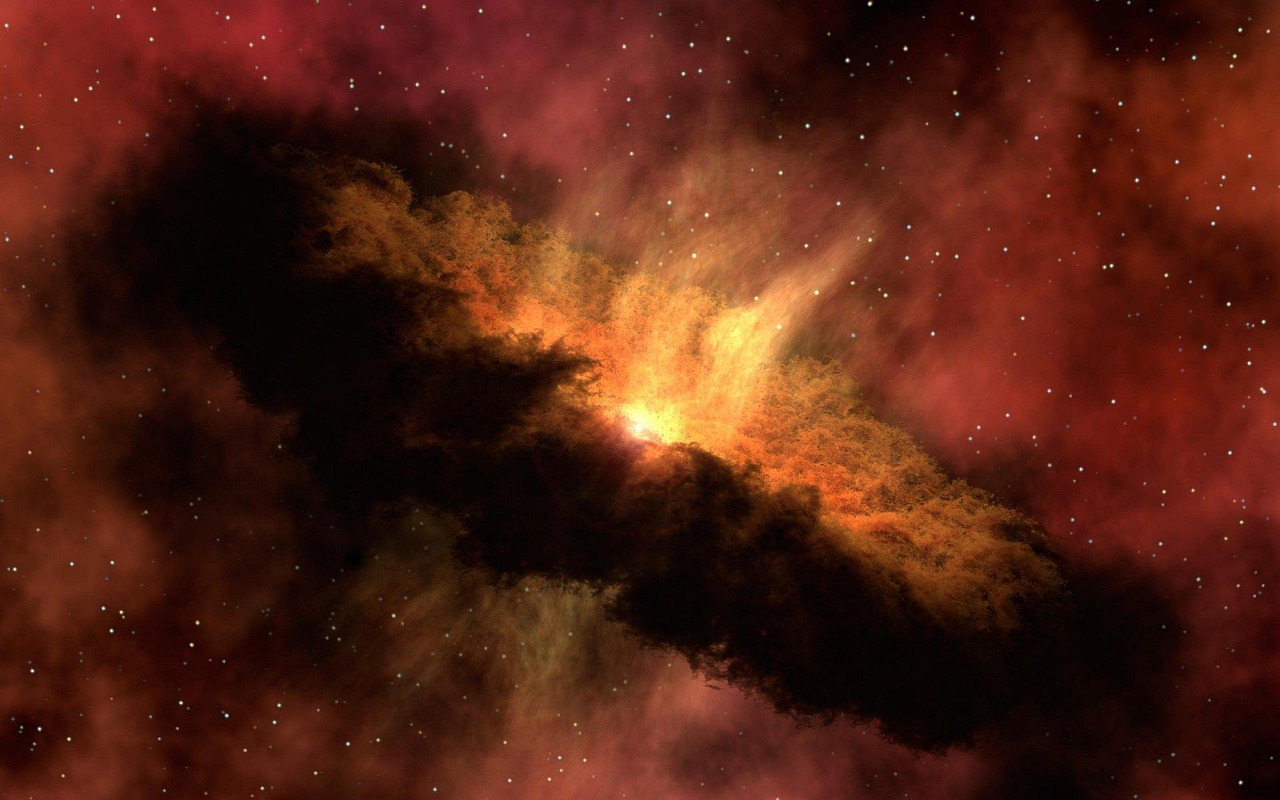
At the very heart of our Milky Way galaxy, an invisible behemoth lurks – Sagittarius A* (Sgr A*), a supermassive black hole weighing in at over four million times the mass of our Sun. While its presence has been inferred for decades through the dizzying orbits of stars around it, direct imaging by the Event Horizon Telescope has now given us a glimpse of its shadow. But beyond the light it warps, Sgr A* is also a profound source of something far more subtle yet equally revolutionary: gravitational waves. These ripples in the fabric of space-time, first directly detected in 2015, promise an entirely new way to understand the most extreme environments in the cosmos, especially the enigmatic abyss of a supermassive black hole.

Introduction to Physics
The universe, in its grandiosity, continuously whispers secrets across cosmic distances. For millennia, humanity has listened through the window of electromagnetic radiation—light, radio waves, X-rays. Yet, a more profound, albeit subtle, messenger exists: gravitational waves, ripples in the very fabric of space-time. These ethereal undulations offer an unparalleled opportunity to probe the most extreme phenomena in the cosmos, particularly the enigmatic supermassive black hole at the heart of our own Milky Way galaxy, Sagittarius A* (Sgr A*).
Overview
Sagittarius A*, nestled approximately 26,000 light-years from Earth, is not merely a cosmic curiosity; it is a gravitational titan, a supermassive black hole with a mass exceeding four million times that of our Sun. It acts as the gravitational anchor for billions of stars and gas clouds, dictating the dynamics of our galactic core. While its presence has been confirmed through the observation of stellar orbits and radio emissions, directly 'seeing' the space-time around it remains a profound challenge.
Sgr A* exists in a dense, dynamic environment, surrounded by a swirling accretion disk of gas and dust, as well as a cluster of young, massive stars. Its event horizon, the point of no return for anything, including light, is roughly 25 million kilometers in diameter—small by cosmic standards, but incredibly powerful. Studying Sgr A* is paramount to understanding galactic evolution, the growth of supermassive black holes, and the fundamental physics governing extreme gravitational environments.
The Promise of Gravitational Waves
Unlike light, which can be absorbed, scattered, or obscured by interstellar dust and gas, gravitational waves pass through matter unimpeded, carrying pristine information directly from their source. For Sgr A*, this means a unique opportunity to map the distortions in space-time caused by its immense mass, to detect objects orbiting or plunging into it, and to test Einstein's theory of general relativity in its most extreme arena. The detection of these 'echoes from the abyss' would revolutionize our understanding of black holes and the galactic center.
Principles & Laws
The quest to map space-time ripples around Sgr A* is deeply rooted in the foundational principles of modern physics.
Einstein's General Relativity
At the heart of gravitational wave astronomy lies Albert Einstein's General Theory of Relativity, published in 1915. This theory redefined gravity not as a force acting between masses, but as a manifestation of the curvature of space-time caused by mass and energy. According to General Relativity, massive accelerating objects—such as merging black holes, collapsing stellar cores, or compact objects inspiraling around a supermassive black hole—distort the space-time fabric, generating propagating ripples known as gravitational waves. These waves travel at the speed of light, carrying energy away from their source.
Nature of Gravitational Waves
Gravitational waves are characterized by their amplitude, frequency, and polarization. As they pass through a region of space-time, they cause objects to periodically stretch and squeeze in perpendicular directions, with the magnitude of this distortion being incredibly small. For waves originating from Sgr A*, the expected frequencies can range from millihertz (mHz), for objects inspiraling into the supermassive black hole, to nanohertz (nHz) for potential very long-period binaries involving Sgr A* itself. The challenge lies in detecting these minuscule distortions, which require detectors of extreme sensitivity and baseline lengths.
Black Hole Dynamics
Black holes are predicted by General Relativity and are regions of space-time where gravity is so strong that nothing, not even light, can escape. Supermassive black holes like Sgr A* are thought to reside at the centers of most large galaxies. The gravitational waves we anticipate from Sgr A* would originate from specific dynamic events: Extreme Mass Ratio Inspirals (EMRIs), where a compact object (like a stellar-mass black hole or neutron star) slowly spirals into Sgr A*; the potential merger of Sgr A* with another supermassive black hole (though no such companion is currently known in its immediate vicinity); or possibly even the relativistic 'kicks' from the anisotropic emission of gravitational waves following such a merger.
Methods & Experiments
Detecting gravitational waves from Sgr A* requires specialized observatories capable of discerning minute space-time distortions across vast cosmic distances.
Ground-Based Detectors (LIGO, Virgo, KAGRA)
Current ground-based observatories like the Laser Interferometer Gravitational-Wave Observatory (LIGO), Virgo, and KAGRA have revolutionized astronomy by detecting gravitational waves from merging stellar-mass black holes and neutron stars. These detectors operate using a Michelson interferometer principle, with kilometer-long arms designed to measure changes in arm length on the order of a thousandth of a proton's diameter. However, their sensitivity range (tens of hertz to kilohertz) is primarily suited for higher-frequency events. The vast majority of signals expected from Sgr A*, particularly EMRIs, fall into much lower frequency bands (mHz to nHz), rendering ground-based detectors largely insensitive to these specific phenomena.
Space-Based Interferometry (LISA)
The Laser Interferometer Space Antenna (LISA) is a planned European Space Agency (ESA) mission, with NASA participation, specifically designed to detect gravitational waves in the millihertz frequency band. This range is precisely where the strongest signals from supermassive black hole dynamics, including EMRIs around Sgr A* and supermassive black hole mergers at cosmological distances, are expected. LISA will consist of three spacecraft forming an equilateral triangle with arms millions of kilometers long, orbiting the Sun in a configuration trailing Earth. Lasers will continuously measure the distances between the spacecraft, detecting minute changes caused by passing gravitational waves. LISA is the primary hope for directly observing gravitational wave signals from Sgr A*.
Pulsar Timing Arrays (PTAs)
Pulsar Timing Arrays (PTAs), such as the North American Nanohertz Observatory for Gravitational Waves (NANOGrav), the European Pulsar Timing Array (EPTA), and the Parkes Pulsar Timing Array (PPTA), search for gravitational waves in the nanohertz frequency range. PTAs utilize an array of precisely timed millisecond pulsars across the galaxy as cosmic clocks. Gravitational waves passing through our galaxy would subtly alter the arrival times of pulses from these pulsars. This method is particularly sensitive to the gravitational wave background from numerous merging supermassive black hole binaries throughout the universe, and potentially for detecting signals from a very massive, long-period binary involving Sgr A*, if such a companion existed. While less likely to pinpoint individual EMRI events around Sgr A*, PTAs could offer indirect clues about its low-frequency gravitational environment.
Probing Sagittarius A*
The specific gravitational wave signatures expected from Sgr A* primarily involve EMRIs. As a compact object spirals closer to Sgr A*, its orbit will slowly decay due to gravitational wave emission. This produces a characteristic waveform whose frequency and amplitude evolve over time, encoding detailed information about the supermassive black hole's mass, spin, and the properties of the surrounding space-time. Such signals, lasting for months or even years, would be exquisite laboratories for testing General Relativity and mapping the extreme gravitational field near Sgr A*'s event horizon. LISA's long arm lengths and isolated space environment make it uniquely capable of detecting these long-period, low-frequency waves.
Data & Results
While direct gravitational wave detection from Sgr A* remains a future triumph, the field has already yielded groundbreaking results, paving the way for such discoveries.
Early Gravitational Wave Discoveries
The era of gravitational wave astronomy began dramatically in 2015 with LIGO's first detection, GW150914, from the merger of two stellar-mass black holes. Subsequent detections by LIGO and Virgo have unveiled a population of merging black holes and neutron stars, confirming long-held theoretical predictions and opening a new window into the violent cosmos. These successes validate the technology and theoretical framework necessary for gravitational wave detection, instilling confidence in future missions targeting Sgr A*.
Challenges in Sgr A* Detection
Detecting signals from Sgr A* presents unique challenges. The frequency range for EMRIs, while ideal for LISA, requires an observatory far removed from Earth's seismic and anthropogenic noise. The signals, though long-lasting, are expected to be weak due to the immense distance to Sgr A*. Furthermore, the complex environment of the galactic center, though not directly affecting gravitational wave propagation, makes multi-messenger correlation with electromagnetic observations challenging due to heavy obscuration by dust and gas. Analyzing the intricate EMRI waveforms requires sophisticated computational techniques and robust theoretical models.
Theoretical Predictions
Theoretically, EMRIs around Sgr A* are expected to generate highly complex, chirping waveforms that sweep through LISA's sensitive frequency band. These signals would carry an unprecedented level of information, allowing for precise measurements of Sgr A*'s mass and spin, and offering the most stringent tests of the 'no-hair' theorem—which posits that a black hole is fully characterized by only its mass, charge, and angular momentum—in the strong-field regime. Models also predict the existence of a gravitational wave background from numerous stellar-mass compact objects orbiting Sgr A* which could be indirectly detected by future observatories or PTAs.
Applications & Innovations
Mapping space-time ripples around Sgr A* transcends mere observation; it promises to unlock profound insights and foster technological advancements.
Unveiling Galactic Center Secrets
Gravitational wave observations will allow us to peer through the obscuring gas and dust of the galactic center, revealing the dynamics of matter and space-time directly adjacent to Sgr A*'s event horizon. This could shed light on its accretion processes, the distribution of dark matter spikes around it, and the potential existence of intermediate-mass black holes or other exotic objects in its immediate vicinity that are invisible to electromagnetic telescopes. It will provide a 3D map of the space-time curvature, revealing how our galaxy's supermassive black hole truly shapes its environment.

Testing General Relativity in Extreme Regimes
Sgr A* offers a unique laboratory for testing General Relativity under the most extreme conditions imaginable. The strong gravitational fields, high velocities, and extreme curvatures associated with EMRIs or objects plunging into Sgr A* provide an unparalleled opportunity to search for deviations from Einstein's theory. Such deviations, if found, would necessitate a revision of our fundamental understanding of gravity and the universe.
Complementary to Electromagnetic Astronomy
Gravitational wave astronomy is inherently complementary to traditional electromagnetic astronomy. While radio, infrared, and X-ray observations provide crucial context about the gas, dust, and stars around Sgr A*, gravitational waves offer a direct probe of the space-time itself and the compact objects that generate these ripples. Combining data from both 'windows' will enable a truly 'multi-messenger' understanding of the galactic center, painting a far more complete and dynamic picture than either method could achieve alone. For example, simultaneously detecting a flare in X-rays or radio waves along with an EMRI gravitational wave signal could provide unprecedented insight into the physics of accretion and jet formation around supermassive black holes.
Key Figures
The pursuit of gravitational waves and the study of black holes are built upon the contributions of numerous visionary scientists.
Pioneers of Relativity and Gravitational Waves
Albert Einstein, whose General Theory of Relativity predicted gravitational waves and black holes, stands as the towering figure. Hermann Weyl, Karl Schwarzschild, and others laid the mathematical groundwork for black hole solutions. Joseph Weber made the first attempts at detecting gravitational waves in the 1960s. Later, Kip Thorne, Rainer Weiss, and Barry Barish, instrumental in the development of LIGO, were awarded the Nobel Prize in Physics for their decisive contributions to the observation of gravitational waves.
Leading Researchers Today
Today, countless astrophysicists, theoretical physicists, and engineers contribute to the ongoing efforts. Scientists working within the LISA Consortium, the various Pulsar Timing Array collaborations, and groups analyzing observations of Sgr A* (such as the Event Horizon Telescope collaboration) are at the forefront. Their work spans theoretical modeling of waveforms, instrumental design and calibration, complex data analysis, and astrophysical interpretation of signals from the galactic center.
Ethical & Societal Impact
While the study of black holes and gravitational waves might seem abstract, its impact ripples through society.
Expanding Human Knowledge
The most profound impact is the expansion of human knowledge. Understanding the nature of space, time, gravity, and the universe's most extreme objects addresses fundamental questions about our existence and the cosmos. This purely scientific endeavor enriches human culture and intellectual curiosity.
International Collaboration
Large-scale projects like LISA and the various gravitational wave observatories necessitate unprecedented international collaboration. Scientists and engineers from dozens of countries pool resources, expertise, and intellect, fostering global cooperation and understanding, transcending political and cultural boundaries. This model of scientific endeavor has broader implications for addressing other global challenges.
Public Engagement
The captivating nature of black holes, space-time, and gravitational waves consistently inspires public interest and awe. This engagement sparks curiosity in STEM fields among younger generations, fostering the next wave of scientists and innovators. Educational outreach programs related to these discoveries bring the wonders of the universe directly to classrooms and communities.
Current Challenges
Despite significant progress, the direct detection of gravitational waves from Sgr A* faces formidable challenges.
Signal-to-Noise Ratio
The primary challenge for LISA, and indeed all gravitational wave detectors, is achieving a sufficiently high signal-to-noise ratio (SNR). The predicted amplitude of gravitational waves from EMRIs around Sgr A* is incredibly small. Distinguishing these faint signals from instrumental noise, cosmic ray hits, and other environmental disturbances requires exquisitely sensitive instruments and sophisticated noise reduction techniques.
Data Analysis Complexities
Extracting EMRI signals from raw data is a computationally intensive task. The waveforms are long-lived and complex, depending on many parameters of the black hole and the inspiraling object. Developing robust algorithms for matched filtering and parameter estimation that can efficiently search through vast datasets and accurately characterize the source properties is a significant ongoing challenge.
Technological Hurdles
Deploying and operating a space-based interferometer like LISA involves overcoming immense technological hurdles. This includes maintaining precise laser links over millions of kilometers, shielding instruments from solar radiation, achieving unprecedented levels of vibration isolation, and ensuring the long-term stability and autonomy of the spacecraft constellation. The cost and complexity of such a mission are also substantial, requiring sustained international commitment and funding.
Future Directions
The future of gravitational wave astronomy promises even more ambitious endeavors, expanding our cosmic reach.
Next-Generation Observatories
Beyond LISA, plans are already being formulated for even more sensitive next-generation gravitational wave observatories. These include proposed ground-based detectors like the Einstein Telescope and Cosmic Explorer, designed to extend the high-frequency range and sensitivity, and potentially future space-based missions that could operate at even lower frequencies or with longer baselines than LISA. These advancements will further refine our ability to detect a wider range of gravitational wave sources, including potentially more subtle interactions within the galactic center.
Multi-Messenger Astronomy Integration
The true power of gravitational wave astronomy will be fully realized through its seamless integration with other observational techniques. Future efforts will focus on developing sophisticated frameworks for combining gravitational wave data with electromagnetic observations across the entire spectrum (radio, infrared, optical, X-ray, gamma-ray) and possibly even neutrino astronomy. This 'multi-messenger' approach will provide a holistic view of cosmic events, allowing for robust source identification, detailed environmental characterization, and unparalleled insights into fundamental physical processes occurring around Sgr A*.
Deeper Exploration of Early Universe
While Sgr A* provides a local laboratory, gravitational waves also hold the key to probing the very early universe. Future detectors will aim to detect gravitational waves from the Big Bang itself, cosmic inflation, or phase transitions in the early universe, offering a window into epochs currently inaccessible to electromagnetic radiation. Understanding Sgr A* serves as a crucial stepping stone to refining our understanding of supermassive black hole formation and growth throughout cosmic history, linking it to the larger cosmological narrative.
Conclusion
The journey to map space-time ripples around Sagittarius A* represents a pinnacle of scientific ambition and technological ingenuity. It is a quest to unravel the profound mysteries of gravity, black holes, and the very fabric of our universe. With missions like LISA poised to unlock the millihertz gravitational wave window, we stand on the precipice of a new era of discovery. The 'echoes from the abyss' will not only illuminate the secrets of our galactic core but also fundamentally reshape our understanding of cosmic evolution and the laws that govern reality itself. As we prepare to listen, the universe promises to reveal wonders beyond our current comprehension, pushing the boundaries of human knowledge and inspiring generations to come.