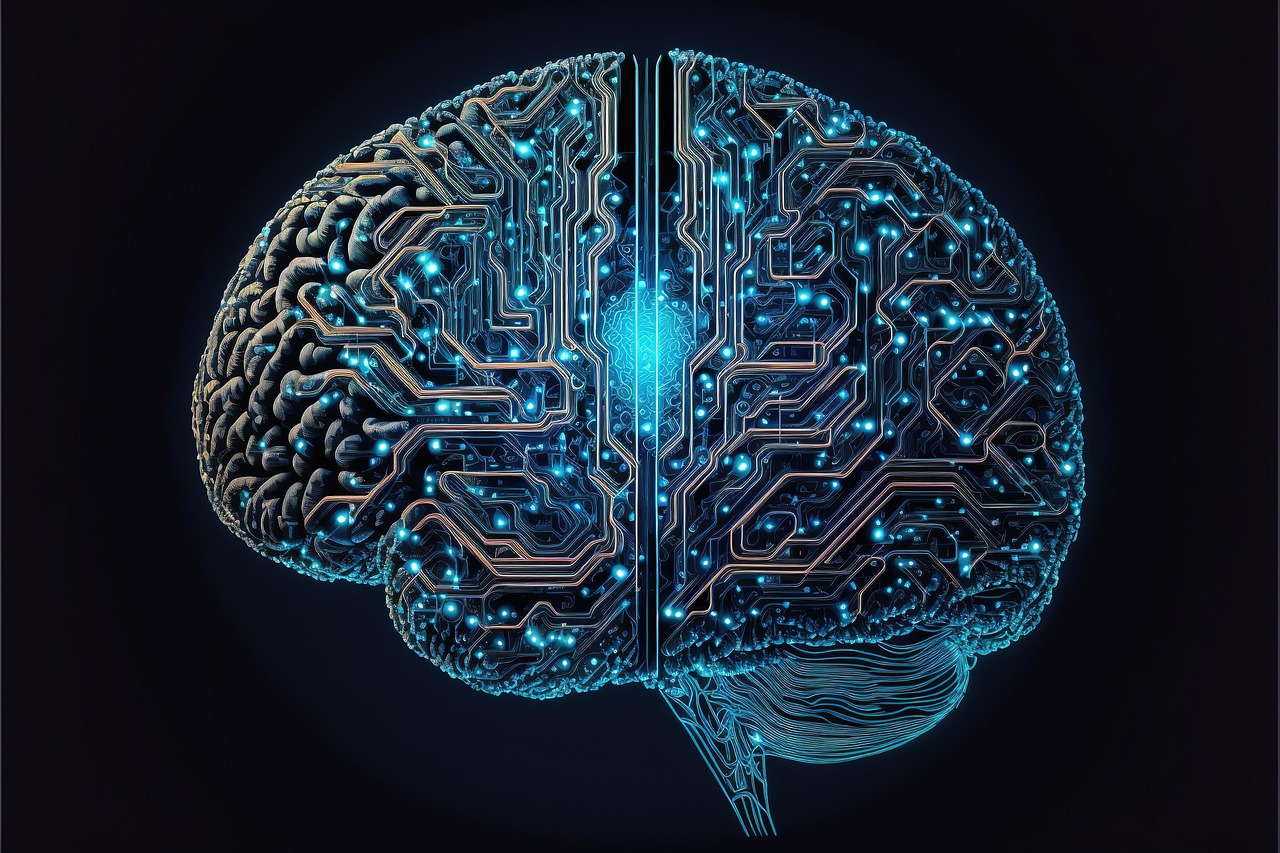
In the enigmatic world of quantum mechanics, a cat can be simultaneously alive and dead – a thought experiment that perfectly encapsulates the bizarre, dual nature of qubits, the fundamental building blocks of quantum computers. Just as Schrödinger's cat exists in a superposition of states, a qubit can be both 0 and 1 at the same time, unlocking computational powers far beyond the reach of classical machines. In the relentless pursuit of this power, IBM has once again pushed the boundaries with its Osprey processor, a monumental leap to 433 qubits, rekindling the fierce race to build the quantum computers of tomorrow.

The quest for computational power has always pushed the boundaries of human ingenuity. From the abacus to classical supercomputers, each era has defined new limits. Today, humanity stands on the precipice of another revolution: quantum computing. At the forefront of this exhilarating race is IBM, which in 2022 unveiled its groundbreaking Osprey processor, boasting an unprecedented 433 superconducting qubits. This monumental achievement not only solidifies IBM’s leadership in the quantum realm but also marks a critical juncture in the journey toward practical quantum advantage.
1. Overview: The Dawn of the 433-Qubit Era
IBM Osprey represents a significant leap from its predecessors, notably the 127-qubit Eagle processor. This exponential increase in qubit count—more than tripling the previous generation—is not merely an incremental improvement; it signifies a qualitative shift in the capabilities of quantum hardware. Osprey operates within the Noisy Intermediate-Scale Quantum (NISQ) era, a phase characterized by quantum processors with a significant number of qubits but still limited by noise and error rates. Despite these limitations, machines like Osprey are powerful enough to explore complex problems beyond the reach of classical computers, even if full error correction remains a future goal. The unveiling of Osprey underscores IBM's ambitious quantum roadmap, signaling a determined march toward fault-tolerant quantum computing.
2. Principles & Laws: The Quantum Mechanics Underpinning Osprey
2.1. The Quantum Core: Superposition and Entanglement
At the heart of quantum computing are the counter-intuitive principles of quantum mechanics. Unlike classical bits, which represent information as either 0 or 1, a quantum bit, or qubit, can exist in a superposition of both states simultaneously. This 'coexistence' of states allows a single qubit to hold more information than a classical bit. Furthermore, multiple qubits can become entangled, meaning their fates are intrinsically linked, regardless of the physical distance separating them. An operation on one entangled qubit instantaneously affects the others. This non-local correlation is a powerful resource, enabling quantum computers to explore vastly more possibilities concurrently than any classical machine.
2.2. Superconducting Qubits and Josephson Junctions
IBM's Osprey processor employs superconducting qubits, specifically the Transmon type. These qubits are fabricated from superconducting materials like niobium or aluminum, cooled to extremely low temperatures (millikelvin range, colder than deep space) to eliminate electrical resistance and thermal noise. The critical component is the Josephson junction, a thin layer of insulating material sandwiched between two superconductors. This junction behaves as a nonlinear inductor, creating an artificial atom with discrete energy levels that can be manipulated and read out using microwave pulses. The energy difference between the ground state (|0⟩) and the first excited state (|1⟩) defines the qubit, allowing for precise control and measurement of its quantum state.
3. Methods & Experiments: Architecting a 433-Qubit Beast
3.1. Osprey's Architecture and Fabrication
Building Osprey demanded breakthroughs in both materials science and engineering. Integrating 433 high-quality superconducting qubits on a single chip, while maintaining their delicate quantum coherence, is a monumental task. The qubits are arranged in a specific lattice structure, designed to optimize connectivity and minimize crosstalk – unwanted interactions between neighboring qubits. Each qubit needs its own control and readout lines, leading to an immense wiring challenge. This is managed through intricate multi-layer fabrication processes, similar to those used in advanced classical semiconductor manufacturing, but with unique quantum requirements.
3.2. Control Systems and Cryogenic Environment
Operating Osprey requires an elaborate control system housed in a custom-built dilution refrigerator. These refrigerators achieve temperatures just a fraction of a degree above absolute zero, essential for superconducting materials to exhibit their quantum properties. Complex microwave electronics precisely generate and deliver picosecond-long pulses to individual qubits, executing quantum gates. These gates—such as Hadamard for superposition or CNOT for entanglement—must be applied with extremely high fidelity to minimize errors. The ability to individually address and manipulate hundreds of qubits simultaneously, without disturbing others, is a testament to sophisticated engineering.
4. Data & Results: Performance and Quantum Volume
While specific detailed experimental results on Osprey's full 433-qubit performance are continually emerging, its significance lies in its sheer scale. Previous IBM processors like Falcon (27 qubits) and Eagle (127 qubits) demonstrated progressive improvements in quantum volume – a metric introduced by IBM to quantify the overall capability of a quantum computer, taking into account both qubit count and error rates. Osprey is designed to achieve significantly higher quantum volume, enabling more complex circuits and potentially leading to more robust demonstrations of quantum advantage on certain problems. The increased qubit count paves the way for exploring quantum algorithms that were previously intractable, pushing the boundaries of what's possible in the NISQ era. The path to achieving 'quantum supremacy' (or quantum advantage, as IBM prefers) for practical, real-world problems depends heavily on these advancements in qubit count and quality.
5. Applications & Innovations: Unlocking New Frontiers
The enhanced power of a 433-qubit machine like Osprey broadens the scope of potential applications:
- Drug Discovery and Materials Science: Simulating molecular interactions and material properties with unprecedented accuracy, leading to the development of new drugs, catalysts, and advanced materials.
- Financial Modeling: Optimizing complex financial portfolios, risk analysis, and algorithmic trading strategies.
- Optimization Problems: Solving intractable combinatorial optimization challenges in logistics, supply chain management, and resource allocation.
- Artificial Intelligence: Accelerating machine learning algorithms, particularly in areas like pattern recognition and data classification.
Innovations in Osprey's design, such as improved qubit coherence times and reduced crosstalk, are crucial for making these applications viable. These advancements facilitate the running of longer, more complex quantum circuits before environmental noise degrades the quantum state.
6. Key Figures: Pioneers in the Quantum Race
IBM's quantum efforts are the culmination of decades of research and investment, led by a dedicated team of scientists and engineers. Key figures like Dr. Dario Gil, Senior Vice President and Director of Research, and Dr. Jay Gambetta, Vice President of Quantum Computing, have been instrumental in charting IBM's ambitious quantum roadmap. Their vision and the relentless work of their teams have propelled IBM to the forefront of quantum hardware development, challenging other major players like Google, Rigetti, Quantinuum, and various national labs in the global race for quantum supremacy.
7. Ethical & Societal Impact: Navigating the Quantum Future
The emergence of powerful quantum computers like Osprey carries profound ethical and societal implications. One of the most frequently cited concerns is the potential to break current public-key encryption standards, which underpin global cybersecurity. This 'quantum threat' necessitates the development and deployment of quantum-resistant cryptography. Beyond security, quantum computing promises transformative benefits in healthcare, environmental science, and economic growth, but also raises questions about equitable access to this powerful technology and the potential for exacerbating existing digital divides. Responsible innovation, international collaboration, and proactive policy-making are crucial to harness quantum computing for the betterment of humanity.
8. Current Challenges: The NISQ Hurdles
Despite its impressive qubit count, Osprey operates within the NISQ era, facing significant challenges:
- Error Correction: The most formidable hurdle. Qubits are inherently fragile, susceptible to decoherence (loss of quantum state) from environmental noise. Building a truly fault-tolerant quantum computer requires encoding logical qubits into many physical qubits, leveraging complex error correction codes. This demands an order of magnitude more physical qubits than Osprey currently possesses.
- Coherence Times: Maintaining the quantum state of qubits for longer durations is critical for executing complex algorithms. Although Osprey's coherence times are excellent for its scale, they remain finite, limiting circuit depth.
- Scalability: Integrating hundreds, and eventually thousands or millions, of qubits while maintaining high fidelity and low crosstalk is an enormous engineering feat.
- Control Complexity: Managing individual control signals for hundreds of qubits simultaneously without interference is a significant challenge.
- Qubit Connectivity: The architecture of qubits on a chip determines which qubits can interact. Optimizing connectivity to allow for efficient execution of various algorithms is crucial.
- Software and Algorithms: Developing algorithms that can effectively leverage the limited, noisy capabilities of NISQ machines is an ongoing area of research.
9. Future Directions: Beyond Osprey
IBM's roadmap extends far beyond Osprey. The company aims to develop processors with over 1,000 qubits (Condor) and then move towards modular quantum systems that can connect multiple quantum processors together, ultimately leading to millions of qubits. This modular approach is key to achieving fault tolerance and scaling to the truly massive qubit counts required for universal quantum computers. Research into hybrid quantum-classical algorithms, which leverage the strengths of both paradigms, is also a vital future direction, allowing NISQ machines to tackle problems by offloading computationally intensive parts to classical computers. The development of a 'quantum internet' for secure quantum communication and distributed quantum computing is another exciting long-term goal.
10. Conclusion: A Step Towards the Quantum Future
IBM's Osprey processor, with its 433 superconducting qubits, is a testament to remarkable scientific and engineering progress. It marks a significant milestone in the journey towards useful quantum computing, pushing the boundaries of what is possible in the NISQ era. While significant challenges, particularly in error correction, still lie ahead, Osprey provides a powerful platform for exploring complex quantum problems and advancing our understanding of quantum systems. The race to 400 qubits, and beyond, is not just a competition of numbers; it's a profound exploration of a new computational paradigm that promises to reshape technology, science, and society itself, moving us closer to a future where Schrödinger's silicon truly unlocks unparalleled possibilities.