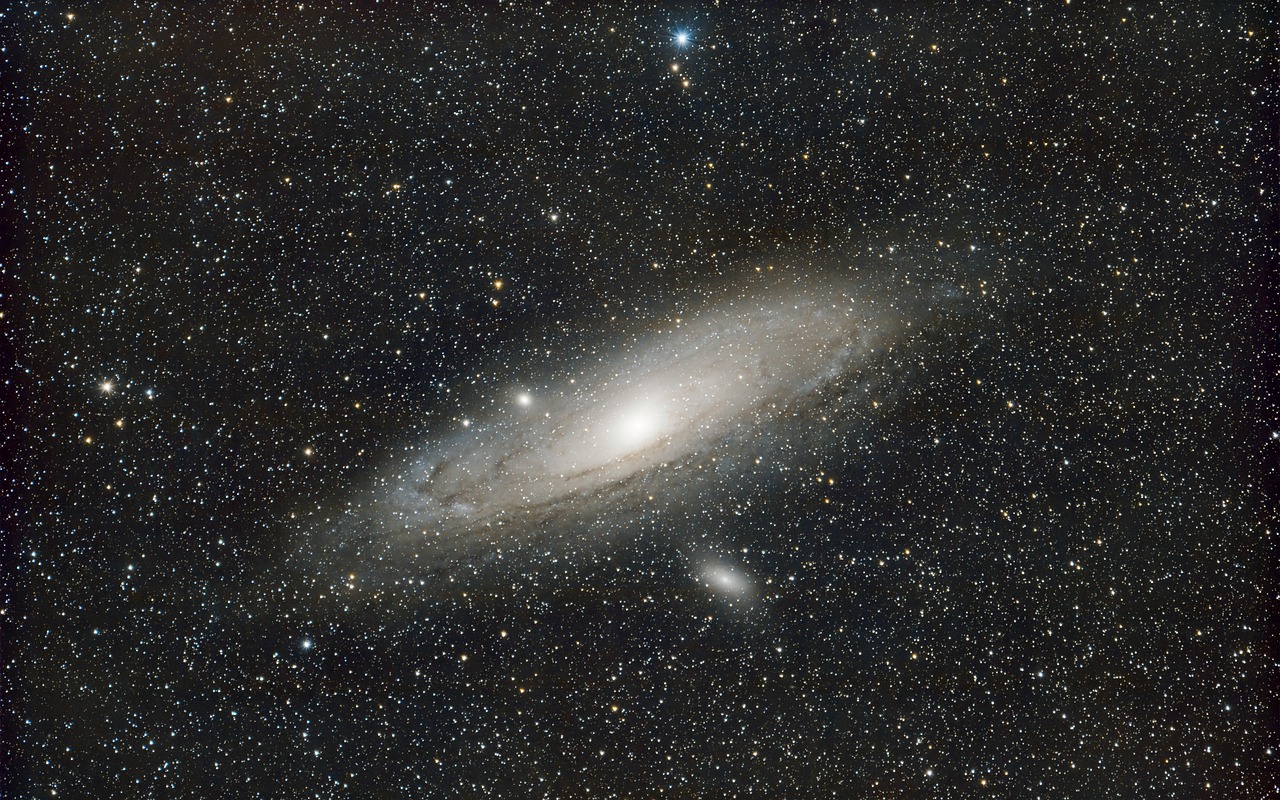
For millennia, humanity has gazed at the stars, pondering our place in the cosmos. While philosophy and religion have offered answers, science has taken a more empirical route, particularly through the lens of astrochemistry. This captivating field bridges astronomy and chemistry, seeking to understand the composition of celestial objects and the intricate chemical reactions that occur in the vast, often extreme, environments of space. Its ultimate quest? To uncover how the universe brews the very molecules that are essential ingredients for life.

Introduction to Chemistry
The universe, in its vastness and complexity, is not merely a collection of stars and galaxies; it is a cosmic laboratory where chemistry unfolds on scales unimaginable on Earth. At the heart of this cosmic endeavor lies astrochemistry, a captivating interdisciplinary field that seeks to unravel the molecular tapestry of space. Its ultimate quest? To understand the origins of life by identifying the essential molecular building blocks present in the interstellar medium, protoplanetary disks, and even within our own solar system. This exploration delves deep into how the universe synthesizes complex organic molecules, setting the stage for abiogenesis, the genesis of life from non-living matter.
Overview
Astrochemistry stands at the nexus of astronomy, chemistry, and biology, investigating the formation, abundance, distribution, and evolution of molecules in the cosmos. Far from being inert voids, vast regions of space—particularly molecular clouds within the interstellar medium (ISM)—are bustling chemical factories. These frigid, tenuous environments harbor a surprising diversity of chemical species, from simple diatomic molecules like molecular hydrogen (H2) and carbon monoxide (CO) to increasingly complex organic molecules, including those crucial for life as we know it. The overarching goal is to trace the chemical pathways that lead from primordial atoms forged in stars to the intricate macromolecules found in living organisms. By studying cosmic chemistry, scientists aim to piece together the universal "recipes" for life, exploring whether these essential ingredients are widespread and could foster life elsewhere in the cosmos.
Principles & Laws
Fundamental Chemical Principles in Space
The chemical reactions occurring in space operate under extreme conditions vastly different from those typically encountered in terrestrial laboratories. The interstellar medium is characterized by extremely low densities (thousands of particles per cubic centimeter, compared to 1019 on Earth), very low temperatures (typically 10-100 Kelvin, though warmer in hot cores), and high levels of energetic radiation (UV photons, cosmic rays). These conditions fundamentally alter reaction kinetics and thermodynamics. Gas-phase ion-molecule reactions, which proceed rapidly even at low temperatures due to electrostatic attraction, dominate in the diffuse and translucent ISM. In denser, colder molecular clouds, surface chemistry on microscopic dust grains becomes paramount. These silicate and carbonaceous dust particles, often coated in layers of ice (primarily water, CO, CO2, and methanol), act as catalytic surfaces. Atoms and simple molecules adsorb onto these surfaces, migrate, and react, forming more complex species that would be energetically unfavorable in the gas phase. Once formed, these molecules can desorb back into the gas phase, contributing to the observed molecular inventory.
Quantum Chemistry & Spectroscopy
The detection and identification of molecules in space rely almost exclusively on spectroscopy, the study of how matter interacts with electromagnetic radiation. Each molecule possesses a unique "spectral fingerprint" determined by its quantum mechanical properties. Molecules absorb and emit photons at specific frequencies corresponding to transitions between discrete energy levels: rotational transitions (microwave and radio wavelengths), vibrational transitions (infrared wavelengths), and electronic transitions (visible and ultraviolet wavelengths). Quantum chemistry provides the theoretical framework to predict these spectral lines, allowing astrochemists to match observed astronomical spectra with known or predicted molecular species. The intensity and shape of these spectral lines also provide critical information about the physical conditions of the environment, such as temperature, density, and velocity, further enriching our understanding of cosmic chemistry and molecular distribution.
Methods & Experiments
Observational Astrochemistry: Telescopes & Techniques
Observational astrochemistry primarily employs large ground-based and space-based telescopes.
- Radio Astronomy: This is a cornerstone of astrochemistry, utilizing instruments like the Atacama Large Millimeter/submillimeter Array (ALMA), the Green Bank Telescope (GBT), and the Robert C. Byrd Green Bank Telescope (GBT) to detect rotational transitions of molecules. These transitions occur at millimeter and submillimeter wavelengths, allowing astronomers to identify a vast array of molecules, from simple diatomics to complex organic compounds, and to map their distribution with high spatial resolution in molecular clouds, protostellar disks, and galactic centers.
- Infrared Astronomy: Space telescopes such as the James Webb Space Telescope (JWST) and the Spitzer Space Telescope are crucial for observing vibrational transitions. Infrared observations are particularly powerful for detecting larger organic molecules, molecular ions, and characterizing the composition of interstellar ices, which are opaque at shorter wavelengths. JWST's unprecedented sensitivity and spatial resolution are revolutionizing our understanding of ice chemistry and the composition of exoplanet atmospheres.
- Ultraviolet/Visible Astronomy: While less direct for complex molecules, UV/Visible spectroscopy helps in understanding the fundamental atomic and simple molecular content, crucial for initial conditions, and the radiation fields that drive photochemistry.
- In-situ Missions: Spacecraft missions provide invaluable ground truth. The Rosetta mission, for instance, directly sampled the coma of comet 67P/Churyumov–Gerasimenko, confirming the presence of a wide range of organic molecules, including amino acid precursors and even glycine, providing direct evidence for comets as potential carriers of life's building blocks. The Huygens probe on Titan provided insights into a highly complex atmospheric chemistry.
Laboratory Astrochemistry: Simulating Cosmic Environments
Complementing astronomical observations are laboratory experiments designed to simulate interstellar and circumstellar conditions. Scientists use ultra-high vacuum chambers, cryostats that achieve temperatures as low as a few Kelvin, and various radiation sources (UV lamps, electron guns, plasma discharges) to replicate the extreme environment of space. These experiments investigate gas-phase reactions, measure reaction rates under interstellar conditions, and study surface chemistry on simulated dust grains. By irradiating interstellar ice analogs with UV light or cosmic ray proxies, researchers can synthesize new molecules and measure their spectroscopic properties, creating a crucial database that helps interpret astronomical observations. These simulations are vital for understanding the chemical pathways that lead to the formation of complex organic molecules and predicting molecules yet to be discovered in space.
Data & Results
Discovery of Interstellar Molecules
The list of molecules detected in the interstellar medium has grown exponentially since the first detections of simple diatomic molecules like OH and NH3 in the late 1960s. Today, over 250 distinct molecules have been identified in space, ranging from small inorganic species (e.g., H2O, CO, HCN) to increasingly complex organic molecules. These include simple alcohols (methanol, ethanol), aldehydes (formaldehyde, acetaldehyde), ketones (acetone), ethers (dimethyl ether), and a variety of nitriles and hydrocarbons. Perhaps most remarkably, molecules such as glycolaldehyde (a simple sugar) and various amino acid precursors (like formamide, which can polymerize to form amino acids) have been detected, pushing the boundaries of cosmic chemistry towards the very foundations of life.

Prebiotic Molecules & the Origins of Life
The detection of these complex organic molecules, especially in star-forming regions and protoplanetary disks, strongly suggests that the building blocks of life are not unique to Earth but are universally present in the raw material from which stars and planets form. Interstellar molecules, delivered to early Earth via comets and meteorites, are increasingly seen as a significant source of prebiotic material. Meteorites, such as the Murchison meteorite, have been found to contain a diverse array of organic compounds, including over 80 different amino acids, some of which are essential for terrestrial life. This evidence supports the hypothesis that the basic molecular ingredients for life may have been extraterrestrially sourced, kickstarting or significantly aiding abiogenesis on early Earth. Astrochemistry thus provides a critical link in understanding the sequence of events from cosmic dust to living cells.
The Role of Interstellar Ices
Interstellar ices play a pivotal role in this chemical evolution. On the surfaces of cold dust grains, atoms and simple molecules freeze out, forming layers of ice. These icy mantles protect molecules from harsh UV radiation and provide a medium where reactions can occur even at very low temperatures. Energetic processing of these ices by UV photons and cosmic rays drives complex solid-state chemistry, leading to the formation of larger, more complex organic molecules, including potential precursors to amino acids and sugars. When these icy grains are incorporated into comets and asteroids, they preserve these molecules, acting as delivery vehicles to nascent planets. The sublimation of these ices in protoplanetary disks or on cometary surfaces then releases these complex molecules into the gas phase, where they can further react or be incorporated into forming planets.
Applications & Innovations
Understanding Planetary Formation & Habitability
The study of molecular abundances in protoplanetary disks provides critical insights into the chemical environment present during planet formation. The distribution of molecules, particularly water and organics, within these disks informs models of how planets acquire their volatile inventories. This directly impacts our understanding of planetary habitability, as the availability of water and essential organic precursors is fundamental for life. Astrochemistry helps identify "habitable zones" not just in terms of stellar flux, but also in terms of the chemical prerequisites for life.
Astrobiology & the Search for Extraterrestrial Life
Astrochemistry is an indispensable partner to astrobiology. By cataloging the molecules present in various cosmic environments, it helps refine the search for biosignatures—molecules or isotopic patterns that would indicate the presence of life—on exoplanets. Knowing what organic molecules are readily formed through abiotic processes in space allows astrobiologists to differentiate between true biosignatures and naturally occurring prebiotic chemistry, providing a framework for interpreting future detections in exoplanetary atmospheres.
Ethical & Societal Impact
Challenging Anthropocentric Views
The discoveries of astrochemistry profoundly impact our worldview. By demonstrating that the fundamental molecular building blocks of life are abundant and widely distributed throughout the universe, it challenges the anthropocentric notion that life, or at least its chemical foundations, is a unique terrestrial phenomenon. This shift in perspective underscores humanity's deep connection to the cosmos, highlighting that we are literally made of stardust and cosmic chemistry.
Informing Future Space Missions
The detailed chemical inventory provided by astrochemistry guides the scientific objectives and instrument design of future space missions. Missions aimed at exploring oceans on icy moons (like Europa Clipper or Enceladus Orbilander) or analyzing atmospheres of exoplanets (e.g., with future large space telescopes) are directly informed by astrochemistry's understanding of what molecules to look for and where to find them. This maximizes the scientific return and increases the chances of discovering extraterrestrial life or its precursors.
Public Engagement & Inspiration
The field captivates public imagination, offering compelling answers to existential questions about our origins and our place in the universe. It inspires future generations of scientists and fosters a greater appreciation for the interconnectedness of all scientific disciplines.

Current Challenges
Detection Limits & Spectral Crowding
Despite significant advancements, detecting and unambiguously identifying very complex, low-abundance molecules in space remains challenging. The vast number of spectral lines from simpler, more abundant molecules can lead to "spectral crowding," making it difficult to isolate the faint signals of new, larger species. Furthermore, many molecules exist at extremely low concentrations, pushing the limits of current telescope sensitivity and resolution.
Complex Reaction Networks
Modeling the intricate and dynamic chemical reaction networks occurring in diverse cosmic environments is computationally intensive and complex. Accounting for varying temperatures, densities, radiation fields, and the presence of dust grains, along with thousands of potential reactions and species, requires robust theoretical frameworks and high-performance computing. Many reaction rates at low temperatures are poorly constrained experimentally.
Bridging Laboratory & Observational Data
A persistent challenge is accurately bridging the gap between laboratory simulations and astronomical observations. Replicating the exact conditions of space in a laboratory is often impossible, and extrapolating laboratory data to cosmic scales can introduce uncertainties. Continuous refinement of both experimental techniques and observational capabilities is essential for robust interpretation.
Future Directions
Next-Generation Observatories
The future of astrochemistry is exceptionally bright, driven by next-generation observatories. Projects like the Square Kilometre Array (SKA) will offer unprecedented sensitivity and spatial resolution at radio wavelengths, enabling the detection of fainter signals and potentially entirely new classes of molecules. Future infrared space missions will continue to push the boundaries of ice chemistry and exoplanetary atmosphere characterization. These instruments will allow for the detection of even larger, more complex prebiotic molecules and and more precise mapping of their distribution.
Advanced Computational Models
The integration of advanced computational chemistry, machine learning, and artificial intelligence will revolutionize chemical modeling. These tools will enable the prediction of new molecules and their spectroscopic properties, efficiently explore vast reaction networks, and more accurately interpret complex observational data. This will accelerate the discovery of new interstellar molecules and deepen our understanding of cosmic chemical evolution.
Interdisciplinary Synergies
Further integration of astrochemistry with astrobiology, planetary science, and experimental organic chemistry will be crucial. Collaborative efforts across these fields will provide a holistic understanding of how life's molecular building blocks are formed, transported, and eventually integrated into nascent biological systems, both on Earth and potentially beyond.
Conclusion
Astrochemistry is a dynamic and profoundly impactful field, serving as a cornerstone in humanity's quest to understand the origins of life. By meticulously charting the molecular landscape of the universe, from the frigid expanses of the interstellar medium to the warm embrace of protoplanetary disks, astrochemists are meticulously piecing together the cosmic recipes that yield life's essential building blocks. The remarkable discoveries of complex organic molecules, including precursors to amino acids and sugars, in distant nebulae and ancient meteorites underscore a fundamental truth: the chemical ingredients for life are ubiquitous. As new observational facilities come online and computational methods advance, astrochemistry will continue to unlock the universe's most profound chemical secrets, bringing us closer to answering the ultimate question: are we alone, and how did life begin?